
Beautiful Plants For Your Interior
Price range: $5.00 through $45.00
I raise New Hampshire Red chickens at Pure Greenland Farm for customers who want a strong, versatile chicken for eggs, meat, breeding and farm production. The New Hampshire Red was developed in New Hampshire and Massachusetts from selected Rhode Island Red lines, with breeders selecting for faster growth, rapid feathering, early maturity and vigor. The breed was admitted to the American Poultry Association Standard of Perfection in 1935.
I raise my New Hampshire Reds with attention to proper nutrition, clean housing, fresh water, good flock management and enough space for normal movement and foraging. I can provide New Hampshire Red chicks, pullets, hens, roosters and breeding stock depending on current availability.
New Hampshire Red chicks are a great option for customers who want to establish their flock from the beginning. I provide young birds with appropriate chick starter feed, clean water, warmth, protection and careful daily observation.
New Hampshire Reds are known for rapid feather development and relatively fast growth. This makes them particularly interesting for farmers who want a dual-purpose bird with useful meat characteristics as well as egg production.
Before purchasing chicks, I recommend having a properly prepared brooder with suitable heat, dry bedding, clean water, chick starter feed and protection from drafts and predators.
New Hampshire Red pullets are young females that are growing toward maturity and future egg production.
For customers who prefer not to manage the earliest brooding stage, pullets can be a practical way to establish a flock. I raise my pullets with appropriate grower nutrition and housing while monitoring their development.
Their eventual egg production will depend on genetics, age, nutrition, lighting, health, housing and general flock management.
Mature New Hampshire Red hens can contribute both eggs and breeding value to a farm flock.
The Livestock Conservancy reports approximately 200–220 large, light-brown eggs per year for New Hampshire hens under suitable conditions, although production varies among strains and individual birds.
I provide my laying hens with a balanced diet, clean water, suitable nesting boxes, adequate ventilation and safe housing. Good management is important because egg production naturally changes with age, season and environmental conditions.
I raise New Hampshire Red roosters for customers who want to establish or expand a breeding flock.
The breed has a deep, broad body and mature males are substantially larger than females. Standard reference weights are approximately 8.5 pounds for mature males and 6.5 pounds for mature hens.
When keeping roosters with hens, I recommend providing enough space and maintaining a suitable flock structure. Individual rooster temperament can vary, so I pay attention to behavior when selecting birds for breeding groups.
New Hampshire Red breeding stock is suitable for farmers who want to produce their own chicks and maintain a dedicated breeding line.
A breeding flock can include mature New Hampshire Red hens and a compatible rooster. Selection can focus on characteristics such as growth, body type, egg production, fertility and temperament.
The Livestock Conservancy notes that different New Hampshire strains can vary significantly in growth, laying ability and broodiness, so choosing breeding birds according to your specific goals is important.
New Hampshire Red hens produce tinted to brown eggs, generally in the large size range.
If you are looking for New Hampshire Red hatching eggs, proper egg collection, storage and incubation are important. Hatch rates can vary according to fertility, breeder condition, egg handling, storage time, temperature, humidity and incubator management.
I recommend customers interested in hatching eggs prepare their incubator before collecting or receiving the eggs.
I feed New Hampshire Red chickens according to their age and purpose.
Because New Hampshire Reds can grow relatively quickly, I pay attention to balanced nutrition rather than relying heavily on high-calorie treats.
I recommend keeping New Hampshire Red chickens in a clean, dry and secure chicken coop with adequate ventilation.
A suitable setup should include:
New Hampshire Reds can also be managed in pasture or free-range systems when the environment is secure. The Livestock Conservancy specifically describes them as a good choice for pastured poultry.
Yes. New Hampshire Reds can be suitable for managed free-range and pastured poultry systems.
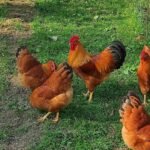
I like giving my birds opportunities to scratch, forage and explore when conditions allow. Free-ranging can provide natural activity, but I still recommend secure nighttime housing and predator protection.
A fenced run is another option when unrestricted free-ranging is not practical.
New Hampshire Red chickens can fit well into backyard, homestead and small-farm environments.
They offer a combination of:
Their dual-purpose characteristics make them useful for customers who want more than an egg-only breed.
New Hampshire Reds have strong meat-production characteristics and were selected historically for rapid growth, early maturity and useful carcass qualities.
Oklahoma State University describes them as medium-heavy dual-purpose chickens selected more strongly toward meat production than egg production, with a deep, broad body and a well-fleshed carcass.
The Livestock Conservancy also notes that cockerels can be raised for meat and that the carcass finishes well.
This is one of the reasons I raise New Hampshire Reds for customers who want a traditional meat-and-egg chicken.
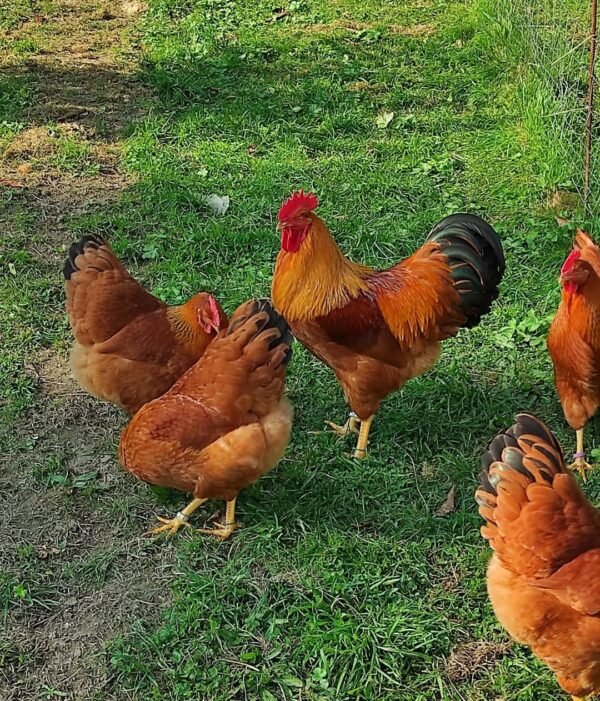
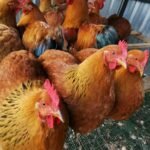
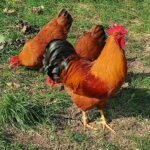
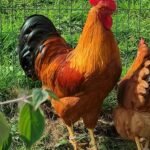
New Hampshire Reds have a distinctive reddish appearance. Their plumage is generally a brilliant chestnut red, although sunlight can lighten the color.
They have:
The breed’s body shape is somewhat more triangular than the brick-like body associated with Rhode Island Reds.
New Hampshire Red roosters are larger than hens.
Standard reference weights are approximately:
Hens are primarily valuable for eggs and breeding, while roosters can contribute to breeding programs and the production of meat-oriented offspring.
Yes, New Hampshire Red hens can provide useful egg production.
The Livestock Conservancy reports around 200–220 large light-brown eggs per year under suitable conditions. Actual laying performance varies with strain, age, nutrition, health, season and management.
The breed is generally better described as a dual-purpose chicken than as a specialized high-output commercial layer.
New Hampshire Reds are particularly well suited to customers looking for a dual-purpose chicken with strong meat characteristics.
They grow rapidly, feather quickly and have a deep, broad body. These characteristics contributed to their historical use in poultry meat production and the famous Chicken of Tomorrow contests.
New Hampshire Reds can be suitable for beginner chicken keepers, particularly when the birds come from a manageable strain and are handled appropriately.
The Livestock Conservancy describes them as generally family-friendly and good for beginners, but also notes that temperament can vary from docile to competitive or aggressive depending on the source stock.
For this reason, I recommend paying attention to individual bird temperament, especially when selecting roosters for a family or backyard flock.
New Hampshire Red temperament can vary.
Many birds can be manageable and family-friendly, while some strains or individual birds can be more assertive. The Livestock Conservancy specifically notes this variation, and Oklahoma State University describes the breed as potentially competitive and aggressive.
Regular gentle handling from a young age can help birds become accustomed to people. I also recommend keeping children away from aggressive roosters, particularly during breeding season.
Some New Hampshire Red hens can be prone to broodiness.
The Livestock Conservancy notes that some strains are prone to going broody and can make good mothers. However, broodiness, egg production and rapid growth do not necessarily occur together at the highest levels, so breeding-line selection matters.
If natural hatching is important to your farm, ask about the characteristics of the specific breeding line.
New Hampshire Reds can be managed in warm climates when housing and flock management are appropriate. The Livestock Conservancy notes that the breed can do well in both warm and cold climates when properly housed.
During hot weather, I provide:
New Hampshire Reds are known for cold tolerance and can be maintained through cold weather with appropriate housing.
I keep their coop dry and well ventilated while protecting birds from direct drafts. Their single comb can be vulnerable to frostbite in severe cold, so proper winter housing is important.
For a homestead, New Hampshire Reds can provide several useful functions in one flock:
Their combination of growth, body size and egg production makes them a practical choice for customers who want a versatile flock.
New Hampshire Reds were developed from Rhode Island Red stock through intensive selection for traits including faster growth, rapid feathering, early maturity and vigor.
New Hampshire Reds generally have a deeper, broader and somewhat more triangular body shape, while Rhode Island Reds are often described as having a more brick-like body.
Both breeds can provide eggs and meat, but individual breeding lines can differ considerably in growth, egg production and temperament.
I raise New Hampshire Red chickens because they combine several characteristics that are valuable on a working farm.
I appreciate their rapid growth, attractive deep-red color, substantial body, useful egg production and ability to work well in pastured or free-range systems. I also value the breed’s history and its importance in the development of modern poultry production.
For customers looking for New Hampshire Red chicks, pullets, laying hens, roosters or breeding stock, I focus on providing birds suitable for their intended flock purpose.
If you are looking for New Hampshire Red chickens for sale, New Hampshire Red chicks for sale, New Hampshire Red pullets, New Hampshire Red laying hens, New Hampshire Red roosters, breeding pairs, breeding stock or hatching eggs, contact Pure Greenland Farm to ask about current availability.
Availability can vary according to age, season, breeding schedules and flock numbers. I can help you determine which type of New Hampshire Red bird best fits your backyard, homestead, breeding program or farm.
New Hampshire Red chickens are an American dual-purpose breed developed from selected Rhode Island Red lines. They are known for rapid feathering, relatively fast growth, early maturity, substantial body size and useful egg production. Hens can produce approximately 200–220 large light-brown eggs annually under suitable conditions, while mature males and females have standard weights of approximately 8.5 and 6.5 pounds respectively.
At Pure Greenland Farm, I raise New Hampshire Red chicks, pullets, hens, roosters and breeding stock for customers looking for productive backyard chickens, homestead poultry, pastured poultry and farm-raised dual-purpose chickens.
If you are looking for a red chicken that can contribute to both your egg production and meat program, New Hampshire Reds can be an excellent addition to a properly managed flock.
| AGE | CHICKS, PULLETS, LAYING HENS, ROOSTERS |
|---|

Reviews
There are no reviews yet.