Beautiful Plants For Your Interior
Are you searching for ducks for sale, healthy ducklings for sale, adult breeding ducks, fertile duck eggs, or the best duck breeds for your poultry farm? Choosing the right ducks can make a significant difference to your farming experience, egg production, breeding results, and long-term costs.
At Pure Greenland Farm, our poultry content is designed to help buyers understand different farm animals, select suitable breeds, and make informed decisions before purchasing. Whether you are a beginner planning to raise your first pair of ducks or an experienced farmer expanding a commercial flock, understanding breed characteristics is the first step toward successful duck keeping.
Ducks are versatile domestic poultry. Some breeds are excellent egg layers, others are raised mainly for meat, and many are appreciated for their beautiful feather colors, unusual body shapes, friendly behavior, or value in ornamental collections. Certain breeds can serve several purposes, although their performance varies according to genetics and management.
For example, Khaki Campbell ducks are widely known for egg production, Pekin ducks are popular for meat production, and Indian Runner ducks are valued for their upright posture, active foraging behavior, and laying ability. Muscovy ducks offer another set of characteristics because they belong to a different species from most domestic duck breeds.
Cornell Vet School
+2
This comprehensive 2026 guide explores the major domestic duck breeds and varieties buyers may encounter, including popular laying ducks, meat-producing ducks, ornamental ducks, rare color varieties, and breeds suited to small farms. It also explains duck prices, housing, feeding, breeding, egg incubation, disease prevention, and how to choose a reputable seller.
If you are looking for ducks for sale near me, ducklings for sale online, best ducks for laying eggs, meat ducks for sale, or rare ornamental ducks for sale, this guide will help you understand what to look for and which breeds may suit your goals.
A note about availability: This article covers a broad range of recognized breeds and varieties, not a guarantee that every breed is currently in stock. Contact Pure Greenland Farm to confirm which birds or eggs are actually available, current prices, and whether delivery to your location is possible.
Domestic ducks are generally selected and kept for three main purposes: egg production, meat production, and ornamental or exhibition purposes. Some breeds can serve more than one purpose, and local breeds may be particularly well adapted to their environment.
FAOHome
+1
These breeds are selected for their ability to produce eggs consistently. Examples include Khaki Campbell, Indian Runner, Welsh Harlequin, Magpie, and Ancona ducks.
They are suitable for keepers who want a regular supply of duck eggs for household use or a properly managed egg business.
These breeds are generally selected for body size, growth, and meat yield. Popular examples include Pekin, Aylesbury, and Muscovy ducks.
The best choice depends on your production system, access to appropriate feed, local consumer demand, and the cost of raising birds to market size.
Some breeds can provide both eggs and meat, although they may not match specialized breeds in either category. Rouen, Silver Appleyard, and certain larger domestic varieties may appeal to keepers seeking a more versatile flock.
Ornamental ducks are valued for distinctive plumage, small size, unusual crests, or attractive patterns. Call ducks, East Indie ducks, and certain exhibition varieties are examples.
Some ornamental waterfowl, including Mandarin ducks, are not ordinary domestic farm ducks. Their sale, possession, breeding, and transportation may be subject to wildlife regulations, so check local law before buying.
The following sections cover the major domestic breeds and varieties buyers may encounter. Availability, accepted colors, breed standards, and terminology vary between countries and breeders.

If your primary goal is to produce duck eggs, consider breeds known for laying ability, while remembering that actual output depends on the strain, age, nutrition, daylight, health, and management.

Khaki Campbell ducks are among the most popular choices for people searching for the best egg-laying ducks for sale. They were developed in England and are known for their high laying potential, active behavior, and practical size.
Under favorable conditions, productive Khaki Campbell strains may approach 250–300 eggs per year, although individual performance varies and this is not a guarantee.
Oklahoma State University
+1
Best suited for: Duck egg production, small farms, backyard egg flocks, and farmers interested in productive laying birds.
Buying tip: Ask whether the seller’s birds come from a line selected for egg production and whether actual flock records are available.
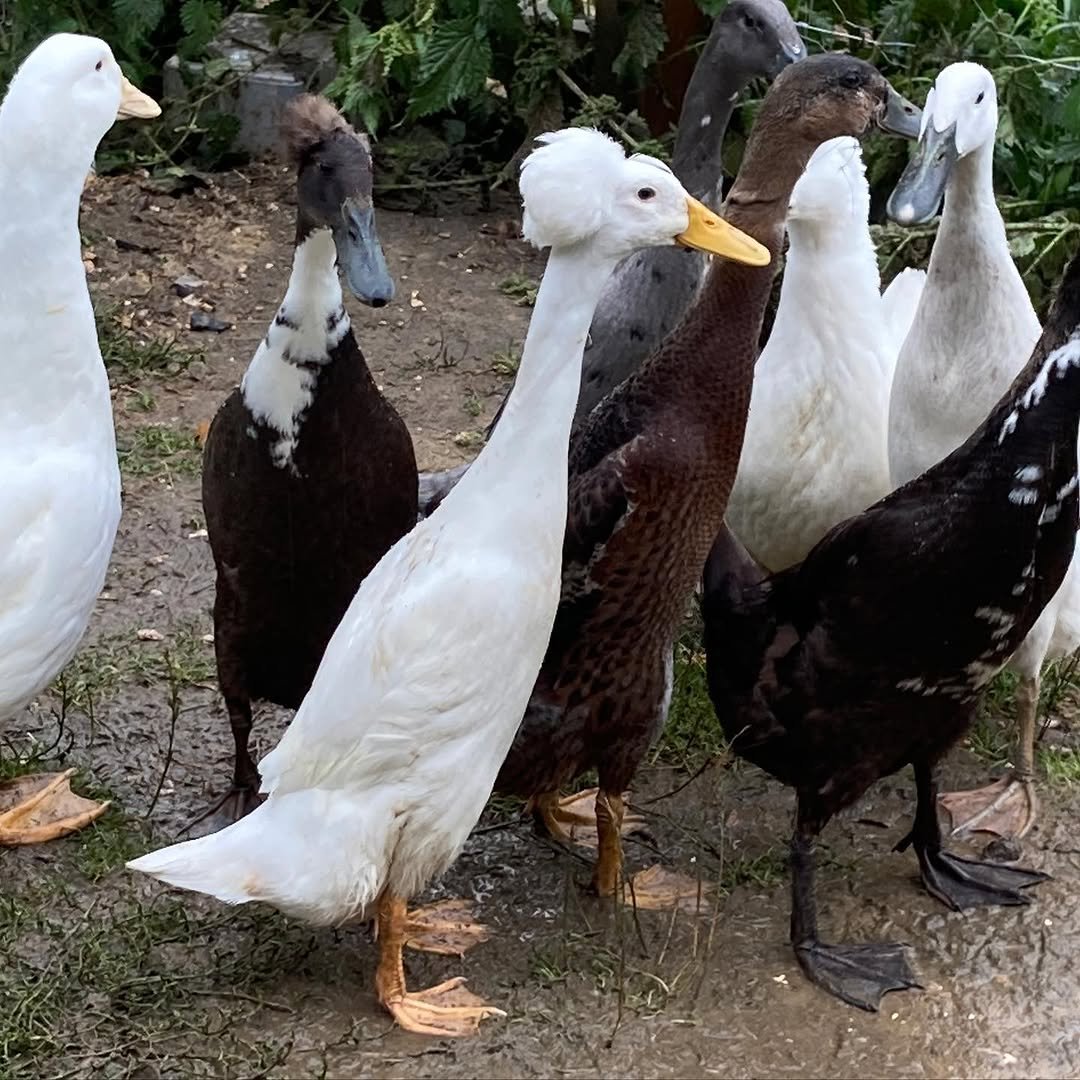
Indian Runner ducks are famous for their tall, upright posture. They are active, alert foragers and come in a range of recognized colors.
They are popular among backyard keepers and small farmers because of their egg-laying ability and distinctive appearance.
Best suited for: Egg production, active free-range systems with secure fencing, gardens, and hobby flocks.
Buying tip: Choose birds with sound legs and feet, normal movement, and a body condition appropriate for their age.
Welsh Harlequins have attractive patterned plumage and can be productive layers. Their appearance makes them popular among keepers who want a practical egg-laying duck with ornamental appeal.
Best suited for: Egg production, backyard poultry, and mixed-purpose small farms.
Buying tip: Ask about the laying performance of the breeder’s line rather than relying on the breed name alone.
Ancona ducks are recognized by their irregular patches of contrasting feather colors. They are active foragers and may produce useful numbers of eggs when properly managed.
Best suited for: Small farms, mixed-color flocks, egg production, and keepers who value patterned plumage.
Magpie ducks have distinctive black-and-white or other recognized contrasting color patterns. They are generally lighter-bodied than large meat breeds and have been used for egg production.
Best suited for: Egg-laying flocks, ornamental collections, and small-scale mixed-purpose farming.
Buff Orpington ducks have warm buff-colored plumage and a rounded, attractive appearance. They can offer a balance of ornamental appeal, egg production, and body size.
Best suited for: Backyard flocks, small farms, and buyers seeking buff-colored domestic ducks.
Silver Appleyards are larger domestic ducks developed for utility and attractive plumage. They are often considered a versatile breed for egg production and meat.
Best suited for: Dual-purpose farms, larger backyard flocks, and exhibition breeding.
Saxony ducks are known for their attractive, patterned plumage and substantial body size. They may appeal to keepers seeking a dual-purpose bird with ornamental value.
Best suited for: Mixed-purpose flocks, small farms, and exhibition enthusiasts.
Abacot Rangers are a utility breed associated with egg production and distinctive plumage. They may be available through specialist breeders rather than general poultry sellers.
Best suited for: Heritage poultry enthusiasts, laying flocks, and specialist breeding programs.
Dutch Hookbills have a distinctive curved bill and a long history as a utility breed. They are often sought by people interested in heritage waterfowl.
Best suited for: Specialist breeding, conservation-minded keepers, and ornamental or utility flocks.
Campbell-related ducks are associated with laying performance. The Khaki Campbell is the best-known variety, while white varieties may be available through particular breeders.
Best suited for: Buyers seeking productive laying ducks with a different plumage color.
Important: Confirm the precise breed or variety with the seller, because the terms Campbell duck and Khaki Campbell duck are not always used consistently in informal listings.
Many regions have local duck populations selected for their ability to thrive in local climates and farming systems. Examples described in regional agricultural resources include Pati ducks, Nageswari ducks, and several local South Asian varieties.
DUck management Guide Farmers Corner _1_
+1
Best suited for: Farmers seeking locally adapted birds, traditional poultry keepers, and production systems based on regional feed and environmental conditions.
Local varieties should be evaluated using reliable information about their origins, performance, and health rather than assuming that every locally named duck is a standardized breed.

If your goal is meat production, the ideal duck should suit your market, feed supply, housing system, and processing arrangements. Breed selection alone does not determine profitability.
Pekin ducks are among the most widely used meat ducks. They have white plumage, a broad body, and strong growth potential when given appropriate nutrition and management.
Commercial Pekin systems can produce substantial body weight in a relatively short period, but small-farm results depend on feed quality, climate, genetics, and disease prevention.
Cornell Vet School
+1
Best suited for: Meat production, commercial duck farming, and small farms supplying a local meat market.
Buyer keywords: Pekin ducklings for sale, white Pekin ducks for sale, Pekin breeding ducks, Pekin duck price, and fast-growing meat ducks.
Muscovy ducks are distinctive because of their red facial skin, relatively quiet behavior, and substantial differences in size between males and females.
Unlike most domestic duck breeds, which descend from the mallard, the Muscovy belongs to a separate species. It is valued for meat and can also be kept for breeding or general farm purposes.
Small and backyard poultry
+1
Best suited for: Meat production, free-range systems with appropriate shelter, and mixed farm flocks.
Important: Muscovies can fly or perch more effectively than many common domestic breeds. Housing and fencing should account for this behavior.
Aylesbury ducks are a traditional British meat breed, usually recognized by their white plumage and substantial body shape.
They are particularly relevant to buyers interested in heritage poultry and meat-focused duck breeds.
Best suited for: Heritage breeding, specialist meat production, and traditional poultry collections.
Rouen ducks resemble mallards in their plumage pattern but are larger and heavier-bodied. They are attractive birds that can be kept for ornamental purposes as well as meat.
Best suited for: Dual-purpose small farms, heritage poultry enthusiasts, and ornamental collections.
Rouens generally grow more slowly than specialized commercial meat strains, so consider feed costs and the age at which you intend to market birds.
German Pekins are associated with European exhibition and utility traditions. Their exact characteristics and standards differ from those of commercial American-type Pekins.
Best suited for: Specialist breeders, exhibition poultry, and people seeking a particular Pekin variety.
Duclair is a French duck breed associated with traditional meat production and distinctive dark plumage with white markings.
Best suited for: Heritage poultry collections, traditional farming, and specialist breeding.
Swedish ducks, including Blue Swedish and Black Swedish varieties, have contrasting plumage and are generally considered utility or dual-purpose birds.
Best suited for: Small farms, mixed-purpose flocks, and buyers seeking attractive ducks with practical farm value.
Pomeranian ducks are a heritage breed associated with Germany and the Baltic region. Their dark plumage and characteristic white bib make them visually distinctive.
Best suited for: Heritage breeding, ornamental flocks, and specialist poultry collections.
Some breeders develop or maintain large-bodied utility lines for local meat markets. Ask whether a bird belongs to a recognized breed, a selected strain, or a commercial cross.
Best suited for: Buyers prioritizing production characteristics over exhibition standards.
Always verify growth claims using realistic farm records. No seller should promise a particular market weight without explaining the bird’s age, genetics, feeding system, and conditions.

Ornamental ducks appeal to buyers who value unusual feather patterns, small size, crests, and exhibition characteristics.
Call ducks are small domestic ducks known for their compact bodies and distinctive appearance. They are available in several colors and varieties, depending on the breeder.
They can be attractive for ornamental collections, but their small size does not eliminate their need for secure housing, balanced feed, clean water, and predator protection.
Search keywords: Call ducklings for sale, miniature ducks for sale, pet ducks for sale, white Call ducks, and ornamental Call ducks.
East Indie ducks are small ornamental ducks traditionally associated with dark, often iridescent plumage.
They are popular among exhibition breeders and collectors who appreciate small-bodied waterfowl.
Best suited for: Ornamental keeping, exhibition, and specialist breeding.
Crested ducks have a distinctive feathered crest on the head. They may be found in white, black, and other colors.
The crest is an inherited trait, and breeding decisions should prioritize bird health. Some crest-related genetic combinations can cause serious developmental problems, so responsible breeders should understand the genetics of their lines.
Best suited for: Ornamental flocks and exhibition breeding with careful attention to welfare.
White Crested ducks are particularly recognizable because of their white plumage and head crest.
Buyers should examine the birds’ condition and ask about the breeder’s approach to responsible crest breeding.
Black Crested ducks combine dark plumage with a characteristic crest. Availability and accepted standards depend on the breeding line and location.
Domestic mallard-colored ducks may display familiar green-headed drakes and patterned females. These birds can be part of domestic breeding collections.
Important: A wild Mallard is not the same thing as a standardized domestic duck breed. Wild-bird capture, possession, sale, and transport may be regulated. Confirm the bird’s origin and legal status before purchasing.
Mandarin ducks are famous for the male’s elaborate plumage and are kept in some specialist ornamental waterfowl collections.
They are not a standard domestic farm duck breed. Their ownership, importation, sale, and breeding can be subject to wildlife and conservation laws. They require appropriate specialist care and should only be obtained legally from reputable, properly authorized sources.
Bali ducks are associated with Indonesia and are sometimes recognized for their upright carriage and distinctive appearance. Breed availability and standardization can vary by location.
Best suited for: Specialist breeding, heritage collections, and keepers interested in regional duck varieties.
Breeders may offer black, blue, chocolate, silver, pied, and other color varieties within particular domestic breeds.
A color name is not necessarily a separate breed. Before paying a premium, confirm whether the seller is describing a recognized breed, an accepted color variety, or a locally developed breeding line.
The following additional names may appear when searching for rare duck breeds for sale, heritage ducks, exhibition ducks, and specialist waterfowl.
| Breed or variety | Main appeal | What to check before buying |
|---|---|---|
| Blue Swedish | Blue-gray plumage, often with white markings | Color, body condition and breeding standard |
| Black Swedish | Dark plumage with contrasting markings in typical examples | Variety identification and parentage |
| Silver Appleyard Miniature | Smaller Appleyard-type ornamental utility duck | Confirm the exact variety and standard |
| Miniature Crested | Small size and crest | Breeding health and crest-related risks |
| Silver Bantam-type ducks | Small ornamental size | Verify the recognized breed name |
| Fawn and White Runner | Upright stance and contrasting colors | Color variety and laying-line history |
| White Runner | White plumage and upright stance | Body condition and breed identification |
| Pencilled Runner | Fine, patterned feathering | Pattern consistency and breeder records |
| Chocolate Runner | Brown color variety | Confirm genetic line and accepted standard |
| Blue Runner | Blue-gray color variety | Parentage and expected offspring colors |
| Gray Call | Small ornamental duck with gray coloring | Breed standard and sex identification |
| White Call | Small white ornamental duck | Health, size and breeding quality |
| Mallard-colored Call | Wild-type pattern in a domestic ornamental breed | Confirm domestic breed identity |
| Black East Indie | Dark, often iridescent ornamental plumage | Color quality and breed conformity |
| White Aylesbury | White heritage meat breed | Authenticity and breeder availability |
| Blue or splash utility ducks | Specialty colors in selected domestic lines | Genetic background and naming accuracy |
These names do not all have the same recognition status in every country. Some are recognized varieties, some are specialist breeding types, and others may be informal color descriptions.
For buyers searching for rare duck breeds for sale, the most reliable approach is to confirm the exact breed, variety, breeder records, and legal status rather than relying on a listing title alone.
Before purchasing ducks, decide what you want them to do. The most attractive breed is not always the most productive, and the highest egg-laying potential does not necessarily make a bird suitable for every environment.

If your goal is duck egg production
Consider Khaki Campbell, Indian Runner, Welsh Harlequin, Magpie, or Ancona ducks. Look for lines with documented laying performance.

If your goal is meat production
Consider Pekin, Aylesbury, or Muscovy ducks, depending on your market, climate, feed supply, and production system.

If your goal is ornamental poultry
Consider Call ducks, East Indie ducks, Crested ducks, or attractive varieties of Swedish and other domestic breeds.

If your goal is a mixed-purpose farm
Consider Rouen, Silver Appleyard, Saxony, Buff Orpington, or suitable local breeds, taking into account their actual performance and maintenance costs.
For many beginners, commonly kept domestic breeds such as Pekin, Khaki Campbell, Indian Runner, and Muscovy are worth researching because information about their general management is widely available.
However, no breed is automatically easy to keep. The best choice depends on the space you have, local climate, access to suitable feed, veterinary support, predator risks, and whether you want eggs, meat, or ornamental birds.
Indian Runners, Khaki Campbells, Anconas, and several other active domestic breeds are often used in systems that allow foraging. The University of Kentucky’s poultry extension resource discusses breed selection and foraging characteristics for small flocks.
Small and backyard poultry
+1
Free-range does not mean leaving ducks unprotected. They still need secure overnight housing, clean water, shelter, and protection against predators.
Eggshell color varies by breed and individual genetics. Some domestic ducks lay white or cream eggs, while others may produce greenish or blue-tinted eggs.
Do not assume that a breed will always produce a particular eggshell color without checking the breeding line. Shell color is not a reliable indicator of egg freshness or nutritional quality.

Searching for baby ducks for sale is often the first step for people starting a new flock. Ducklings can be enjoyable to raise, but their early care needs to be planned carefully.
Look for active ducklings that stand and walk normally, respond to their surroundings, and show no obvious signs of injury or illness.
Ask the seller:
No visual inspection can guarantee that a duckling is free of disease. A reliable source, appropriate transport, and good early management all matter.
Ducklings need a complete feed formulated for waterfowl or a suitable poultry starter ration recommended by a qualified poultry professional. Their dietary needs differ from those of adult ducks.
Some poultry feeds do not supply sufficient niacin for growing ducklings, so feed selection deserves particular attention. Ask a veterinarian or poultry nutrition professional about an appropriate ration and whether supplementation is necessary.
Provide clean water that allows ducklings to drink and clear their nostrils without creating a dangerous soaking or drowning risk.
Young ducklings need an appropriate brooding temperature, but a heat lamp is not the only possible way to provide warmth.
Use a safe brooder system with a warm zone and a cooler zone so the birds can regulate their comfort by moving around. Follow reputable equipment guidance, secure heating devices against fire and contact hazards, and monitor duckling behavior closely.
Persistent huddling may indicate that the brooder is too cold, while panting or avoiding the heat source can indicate excessive warmth.
Ducklings may show natural swimming behavior, but that does not mean newly hatched birds are ready for unsupervised swimming.
Young ducklings can become chilled or exhausted. Provide safe drinking water and introduce swimming only when appropriate for their age, feather development, conditions, and supervision. They must be able to leave the water easily and dry in a suitable environment.
Growth varies by breed, genetics, feed quality, health, and management. Specialized meat breeds such as Pekins generally grow faster than many ornamental varieties.
Be cautious about seller claims that promise a particular weight by a particular date without explaining the conditions and genetic line involved.
The price of ducks varies widely by country, breed, age, sex, color, pedigree, seller, and shipping arrangements. A day-old duckling and an established breeding pair are different purchases and should not be compared solely by their total price.
| Duck type | Factors affecting price |
|---|---|
| Day-old ducklings | Breed, hatchery, quantity, age and availability |
| Started ducklings | Age, development, health and sexing |
| Adult ducks | Age, condition, breed and previous production |
| Egg-laying ducks | Breed, laying history, age and genetic line |
| Meat ducks | Breed, age, weight and local market demand |
| Breeding pairs | Parentage, compatibility, fertility history and quality |
| Rare-color ducks | Verified variety, genetics and breeder reputation |
| Ornamental ducks | Breed recognition, color, size and exhibition quality |
| Fertile duck eggs | Parent stock, fertility history, packing and transport |
| Specialist waterfowl | Legal requirements, rarity, breeding records and specialist care |
Ducklings may have a lower purchase price than mature breeding birds, but they require suitable brooding equipment, heating where needed, extra monitoring, and time to reach maturity.
Adult birds may be more expensive upfront, yet they can be useful if you need an established breeding group or laying flock. Their age, health, and previous production records should be verified.
Compare reputable local breeders and hatcheries, check the total cost of transport, and ask whether quantity discounts are available. Avoid purchasing birds solely because a seller offers an unusually low price.
For buyers enquiring through Pure Greenland Farm, confirm the exact breed, age, quantity, current price, and delivery or collection arrangements before making payment.
Yes, fertile duck eggs are sold by some breeders. However, fertility and hatchability are not guaranteed, even when the parent flock is healthy.
Ask about the age of the eggs, parent birds, collection and storage practices, packing methods, and the seller’s policy for transport-related problems.

Good management is essential regardless of whether you keep two backyard ducks or a larger commercial flock.
Space requirements depend on the birds’ size, flock composition, access to an outdoor area, local welfare standards, and the amount of time they spend indoors.
Avoid overcrowding. Ducks need enough space to rest, walk, reach food and water, and move away from aggressive flock mates.
Not every domestic duck requires a large pond, but ducks do need reliable access to clean water deep enough to immerse their bills and clean their nostrils. Suitable bathing water can also support normal preening and behavior.
A pond is optional for many domestic production systems, provided water and environmental needs are met. If you provide a pool or pond, design it so birds can enter and exit safely, and manage drainage and water quality to prevent muddy, contaminated conditions.
Use a nutritionally complete ration appropriate for the duck’s age and purpose. Ducklings, laying ducks, breeding adults, and meat birds can have different requirements.
Foraging can supplement the diet but should not be relied on as the sole source of nutrition. Avoid moldy feed, contaminated water, and excessive treats.
Sometimes, but mixed housing requires careful management. Ducks tend to make their environment wetter, which can damage chicken bedding and contribute to hygiene problems.
Provide separate or carefully designed drinking areas, keep chicken bedding dry, and monitor both species for aggression and illness. Ask a poultry veterinarian about disease prevention appropriate to your location.
Remove wet bedding, prevent standing water in resting areas, clean and refill drinkers regularly, store feed securely, and control rodents and wild-bird access.
Maintain good ventilation while protecting birds from harsh weather. The objective is a clean, dry resting area and a managed outdoor environment—not an enclosure that stays muddy or contaminated.
Breeding ducks can be a valuable part of a farm, but success depends on the quality of the parent stock, appropriate mating groups, egg handling, incubation, and duckling care.
Many common domestic duck breeds hatch after approximately 28 days, although exact timing varies by breed and incubation conditions.
Muscovy eggs usually require around 35 days, making their incubation period different from that of most common domestic ducks.
Small and backyard poultry
+1
Always use breed-appropriate incubation guidance instead of assuming every duck egg follows the same schedule.
Start with healthy breeding birds and normally formed eggs. Collect eggs regularly, handle them carefully, and store them according to reliable waterfowl incubation guidance.
Follow the incubator manufacturer’s instructions for temperature, humidity, ventilation, and turning. Check that the equipment is functioning correctly rather than relying entirely on its display.
Record the number of eggs set, fertile eggs, successful hatches, and ducklings surviving the early brooding period. These records help identify recurring problems.
Select healthy birds with sound legs and feet, appropriate body condition, normal movement, and characteristics suited to your goals.
If you are developing a particular color line, maintain parentage records. If you are selecting for egg production, keep reliable laying records rather than choosing birds based only on appearance.
Many common domestic duck breeds can interbreed, but the offspring may not retain the appearance or production traits of either parent breed. Muscovy ducks are a different species, and crosses between Muscovy and mallard-derived domestic ducks produce hybrids known as mule ducks, which are generally sterile.
Small and backyard poultry
+1
If you want predictable offspring, buy breeding birds with documented ancestry and understand the genetics of the proposed mating.
Healthy ducks need more than good feed and a secure shelter. Regular observation and preventive care help protect the flock and reduce avoidable losses.
Ducks can experience external parasites, foot injuries, nutritional deficiencies, respiratory illness, digestive problems, and infectious diseases. Symptoms can overlap, so diagnosis should not rely on appearance alone.
Watch for:
Contact a poultry veterinarian when you notice significant or persistent symptoms. Sudden deaths or multiple sick birds require prompt attention, particularly where avian influenza or another reportable poultry disease may be present.
Quarantine new arrivals separately from your existing flock for a period recommended by your veterinarian or local poultry-health authority. Use separate equipment where practical, monitor the birds daily, and avoid sharing contaminated footwear between enclosures.
Do not mix birds of different ages and unknown health status without a plan. Check local recommendations for vaccination, parasite control, and testing.
Vaccination requirements vary according to location, disease exposure, and the type of duck operation. Ask a poultry veterinarian or agricultural extension service about appropriate preventive measures.
Never assume that all ducks require the same vaccine schedule or that a seller’s verbal assurance replaces health records.
For further information about domestic duck selection and care, consult Cornell University’s Duck Research Laboratory and the FAO’s small-scale poultry production guidance.
Buying ducks online can help you find breeds that are unavailable locally, but live-animal purchases need careful planning.
Before ordering ducks for sale online, verify the seller’s identity, the breed and age of the birds, their health status, and the transport arrangements.
Use this checklist before making a purchase.
0 of 10Confirm the exact breed and variety.Verify the birds’ age, sex and quantity.Request recent photographs and parentage details where relevant.Ask about health checks and vaccination records where applicable.Confirm the current price and any transport charges.Check live-animal shipping and replacement policies.Verify import permits and animal-health requirements.Prepare suitable housing, water, feed and quarantine space.Keep written order details and payment records.Confirm delivery dates and who to contact if a bird arrives unwell.Copy checklist
Start with reputable poultry breeders, agricultural suppliers, local poultry associations, and established hatcheries. Local sellers may make it easier to inspect the birds and reduce transportation complications.
You can also visit Pure Greenland Farm to explore the farm’s poultry offerings and enquire about available duck breeds.
Before placing an order, confirm that the specific breed is in stock, the quoted price is current, and the seller can legally arrange delivery to your destination.
Duck farming can generate income through the sale of table eggs, fertile eggs, ducklings, adult breeding birds, meat birds, and ornamental varieties. However, profitability depends on costs, management, and market demand rather than breed popularity alone.
A small farm selling ducklings to local poultry keepers may have a very different business model from a meat producer supplying restaurants or a breeder selling specialist ornamental ducks.
Include the following expenses when planning your operation:
The answer depends on what your customers want.
Before investing in a large flock, research the local market and calculate your expected cost per bird or egg. Verify demand with actual customers rather than assuming that every breed will sell at a premium.

You can look for ducks through reputable breeders, hatcheries, agricultural suppliers, and specialist waterfowl farms. You can also visit Pure Greenland Farm to enquire about current poultry availability and purchasing arrangements.
Yes. Some breeders and hatcheries sell ducklings online. Check the seller’s reputation, animal-health practices, transport conditions, and shipping policies before ordering.
The best breed depends on your goal. Khaki Campbell and Indian Runner ducks are popular laying breeds, Pekins are widely used for meat, and Call ducks are popular ornamental birds.
Prices depend on location, age, breed, and availability. Compare the total purchase and transport costs rather than selecting birds based only on the lowest advertised price.
Khaki Campbell, Indian Runner, Welsh Harlequin, Magpie, and Ancona ducks are worth considering for egg production. Actual performance depends on genetics and management.
Pekin and Muscovy ducks are widely used for meat, while Aylesbury ducks are a traditional meat breed. Select a breed that matches your feed supply and intended market.
Call ducks, East Indie ducks, and Crested ducks are popular ornamental choices. Swedish and other domestic breeds may also be kept for their attractive plumage.
Specialist breeders sometimes sell rare or less common domestic varieties online. Verify the bird’s identity, breeding records, legal status, and transport arrangements before purchasing.
There is no universal price. Age, breed, quantity, seller, location, and delivery costs all influence the final amount.
Pekin, Khaki Campbell, Indian Runner, and Muscovy ducks are commonly kept breeds worth researching. Your final choice should reflect your housing, climate, and production goals.
Khaki Campbell ducks are known for high laying potential. Some productive lines may approach 250–300 eggs annually under favorable conditions, but individual results vary.
Muscovies can be suitable for meat production, breeding, and certain free-range systems. They require suitable housing and management and have a different biology from most domestic duck breeds.
They can be, provided you have enough space, suitable feed, clean water, and appropriate shelter. Their rapid growth also means that feed and housing plans should be prepared in advance.
Not necessarily. Ducks need suitable drinking water and opportunities for normal bathing and preening, but many domestic flocks can be managed without a large pond.
Ducklings need a complete starter feed formulated for waterfowl or a suitable ration recommended by a poultry professional. Provide safe drinking water and appropriate brooding conditions.
Most common domestic duck eggs hatch in approximately 28 days. Muscovy eggs usually take around 35 days.
Yes, some breeders sell fertile duck eggs. Hatch success depends on fertility, egg handling, storage, incubation conditions, and the condition of the parent flock.
Many domestic breeds can live together when introduced carefully and provided with adequate space, feeding points, and suitable shelter. Monitor for bullying and differences in size or behavior.
They sometimes can, but mixed flocks require careful hygiene and housing management. Ducks produce wetter conditions, so chicken bedding must remain dry.
Indian Runners, Khaki Campbells, Anconas, and other active domestic breeds can be considered for suitable free-range systems. Predator protection and reliable feed remain essential.
Call ducks are small and attractive ornamental birds, but they still require proper poultry housing, water, nutrition, and regular care. Their small size does not eliminate predator risks.
Some specialist collections may offer legally sourced Mandarin ducks, but they are not ordinary domestic farm ducks. Confirm applicable wildlife, import, and ownership rules before purchasing.
In many mallard-derived domestic breeds, adult males develop curled tail feathers and characteristic plumage, while females often have different coloration. Muscovy ducks have different sex characteristics, and young birds may be difficult to sex accurately.
The best choice depends on the space, noise restrictions, climate, and your purpose. Smaller ornamental breeds may be appealing, but all ducks need suitable housing and a managed water source.
They can be profitable when there is sufficient demand and the cost of feed, housing, labor, health care, and transport is managed carefully. Profit is not guaranteed.
Check reputable breeders and hatcheries that specialize in laying ducks. Ask about the laying performance of the parent stock and whether the seller has current availability.
Pekin ducklings may be available from poultry hatcheries and domestic duck breeders. Confirm their age, health status, feeding requirements, and delivery arrangements.
Choose healthy birds with suitable body condition and traits aligned with your objectives. Khaki Campbell, Indian Runner, Pekin, Muscovy, and specialist ornamental breeds can all be considered for different breeding goals.
Prepare their housing before arrival, provide the correct feed and clean water, monitor their behavior, and quarantine them appropriately before introducing them to an existing flock.
Visit https://puregreenlandfarm.com/ and contact the farm to confirm which breeds, ages, quantities, and purchasing arrangements are currently offered.
Choosing the right ducks begins with understanding what each breed can realistically offer. Whether you are interested in high-producing laying ducks, fast-growing meat breeds, colorful ornamental waterfowl, or healthy ducklings for a new flock, there are many options to explore.
Khaki Campbell ducks may suit egg-focused farmers. Pekin and Muscovy ducks may suit particular meat-production systems. Indian Runners, Welsh Harlequins, and Anconas can appeal to laying-flock owners, while Call ducks and Crested ducks offer ornamental appeal.
Whatever breed you choose, prioritize healthy stock, responsible breeding, suitable housing, balanced feed, clean water, and careful biosecurity.
At Pure Greenland Farm, we encourage buyers to research their options, ask questions, and choose poultry that fits their farming goals.
Looking for ducks for sale? Explore Pure Greenland Farm and enquire about current availability, breed varieties, pricing, and delivery options before placing your order.
Use these educational resources to support the article and help readers research their choices further.

Cornell University — Domestic Ducks
University resource covering breed selection and differences between meat and other duck types.
Read about domestic duck breeds

Oklahoma State University — Khaki Campbell Ducks
Information about the breed’s origin, egg-laying characteristics, and management considerations.
Read the Khaki Campbell profile

Poultry Extension — Selecting a Duck Breed
Guidance for choosing ducks for backyard and small-flock systems.
Read the duck breed selection guide

Food and Agriculture Organization — Small-Scale Poultry Production
Background on duck breeds and their uses in small-scale farming.